Table of Contents
Introduction
Digital learning for kids is now a regular part of everyday life. From online lessons to educational games, children today learn in ways that were previously impossible. However, many parents worry about screen time and question whether all digital content is truly helpful for their child’s learning and well-being.
At Godavari Public School, we believe that technology, when used correctly, can be a powerful tool for growth and learning. This blog demonstrates how to make digital learning for kids safer, more effective, and more balanced, instead of making it a cause of stress for children.
Understanding Reasonable Screen Time
Screen time is likely to be the most common problem that accompanies children learning through technology. According to research by the American Academy of Paediatrics (AAP) and the World Health Organisation (WHO), excessive exposure can affect children’s sleep, attention span, and physical activity.
You can make better use of Screen Time by following these steps:
- Consider age-based guidelines: If your child is under two, avoid using screens for anything other than video chats. Limit children ages two to five to one hour a day of reading informative educational materials. For children ages six and older, set a firm limit and combine screen time with other healthy habits.
- Focus on quality before quantity: It is far better for kids to watch ad-free, educational and quality interactive videos than mindlessly scrolling through reels on social media.
- Creating screen-free spaces: Refraining from using electronics an hour before bed or right before meals encourages improved family time and sleep.
- Be their role model: Kids often imitate adults around them. You can set a strong example for them by responsibly using your own screen time.
By implementing such restrictions early on, you can teach your kids that screens are merely a teaching instrument and not an everyday source of distraction.Teachers at Godavari Public School also follow these practices to ensure balanced technology usage among students.
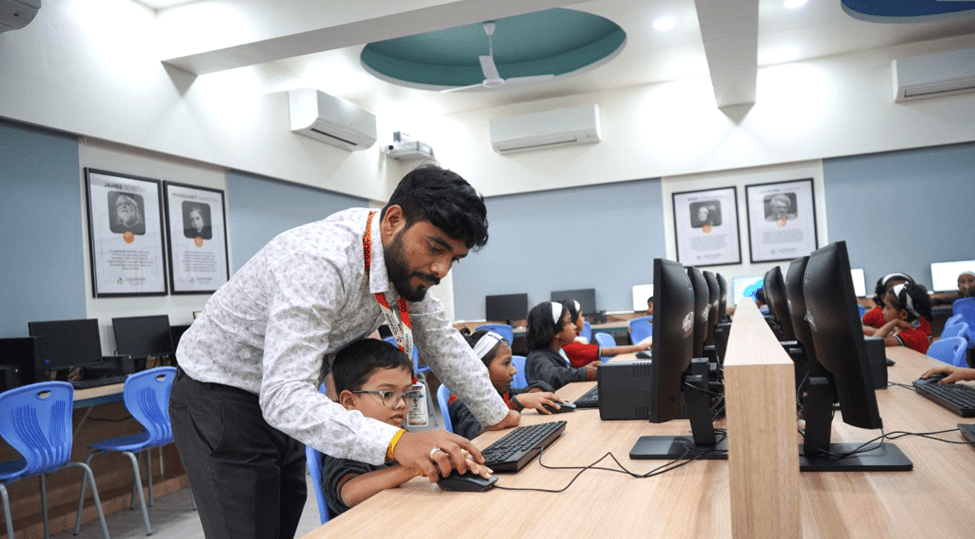
digital learning for kids
Smart Learning Tools for Kids
The real challenge of digital learning for kids lies in the kind of tools that they use. With a plethora of tools, applications and websites available, it becomes difficult to choose the right ones. Always choose ones that have the following features:
- Content that is suitable for the kids’ age and is related to the schoolwork.
- An interactive structure that uses visuals, activities, and assessments to keep students engaged.
- Has a feature of tracking parents’ and teachers’ progress.
- Wherein security and privacy can be maintained with no unwanted collection of data or intrusive ads.
The following are some prominent examples of the tools that can be used:
- For elementary and middle school: Duolingo for languages, Prodigy for arithmetic, Scratch for new coders
- For older children: TypingClub for typing skills, Google Arts & Culture for virtual outdoor adventures, and Quizlet for homework assistance.
We also promote other sources of digital learning resources at Godavari Public School, like podcasts, educational YouTube videos, and e-books, which provide a variety of choices and assistance in making study assignments easier.
Balance Offline and Screen Time
Just because the online apps come easily and are handy does not mean that they will replace the offline classroom. Even some of the best apps for studying still can’t compete with what the real-world experiences are designed to offer. Digital learning for kids is successful when offline activity is balanced with screen time. The following steps can be used to maintain balance.
- Have a routine: A time can be allotted to online study, homework, outdoor play, and family time.
- Provide ‘tech breaks’: Once the child has spent around 30-45 minutes on a device, make them stretch, stand up and take a walk, or involve them in some sort of physical activity.
- Provide offline activities for learning: Kids can be asked to perform activities such as reading a book, building blocks, doing some art or craft-related activity, or performing some science experiments that can help transform digital knowledge into reality.
- Frame rules with your child: Involve your kids in formulating rules regarding time constraints as to how much time they will be allowed for the screens. This will help increase their cooperation and teach them self-regulation.
This way, it will help the kids build not just knowledge but also foster good habits and life skills, which will help in the long run.Teachers at Godavari Public School emphasize that such practices not only build knowledge but also instill good habits and life skills.
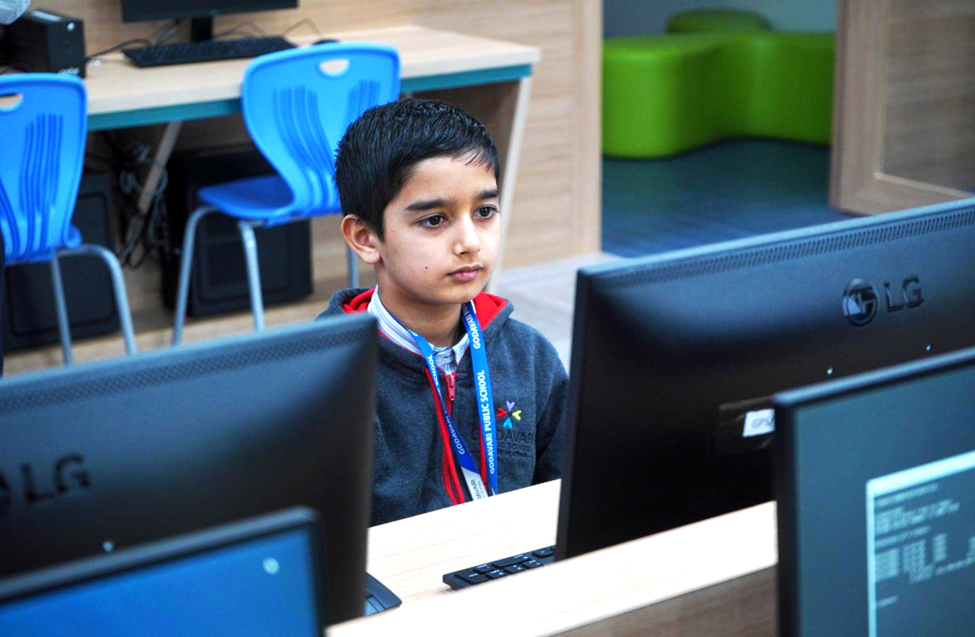
Some advice for parents
Parents’ involvement in children’s schedules makes a huge difference. When parents actively manage their children’s online learning habits, challenges reduce and outcomes improve. Try out the following suggestions:
- Be a co-teacher: Interact with your child throughout online classes and see what they find exciting or annoying.
- Use the built-in parental tools: Tools like Google Family Link, Apple Screen Time, and App Dashboard allow you to set time limits and ban harmful content.
- Teach about online safety: Teach children about online safety and explain that sending personal information is never acceptable and how to recognize pop-ups and ads.
- Check in with them often: Chat with them and ask them about their daily activities, such as “What did you learn today?”, to encourage them..
- Be a good role model: Provide your child with a good role model by avoiding the use of screens as well, particularly when engaging in family time.
Children learn to use screens as tools with a purpose, rather than merely as a distraction, when adults do the same. So, better first begin with yourself. At Godavari Public School, we also conduct sessions to educate parents on guiding their children’s digital habits effectively.
Understanding some issues and their solutions:
Keeping the above in mind, the following problems still need to be addressed.
- Eye strain and poor posture: You can prevent eye strain by following the 20-20-20 rule, which suggests that you look 20 feet away for 20 seconds every 20 minutes. And please sit straight and have the screens at eye level.
- Online fraud: Monitor the child’s internet activity during the day. Always check the app’s permission, and place their devices in a shared location.
- Over-dependence: Make sure to engage your children in non-technological activities, such as reading a book or spending time with family on weekends.
If these problems are addressed, your child can maintain a positive and lasting relationship with technology.
Conclusion:
Electronic displays cannot be eliminated, but their power depends on how we use them. Appropriate restrictions, proper app use, and guidance from parents can transform digital learning into a healthy tool for children to develop creativity, curiosity, and analytical skills.
Parents and teachers can now look at screen time as the student’s friend rather than another reason to worry. At Godavari Public School, we aim to help parents and students see screen time as a friend rather than a foe. With the right approach, children can use digital devices to their advantage and also learn to engage with technology responsibly.
Frequently Asked Questions (FAQs)
1. How does Godavari Public School ensure safe and effective digital learning for students?
Godavari Public School promotes age-appropriate educational content, structured routines, and supervised screen time. Teachers follow digital safety norms to help students learn responsibly without distractions.
2. How does Godavari Public School support parents in managing kids’ digital habits?
Godavari conducts counseling to help parents understand screen limits, safe digital tools, and practical strategies for healthy technology use at home.
3. How can digital learning improve my child’s academic performance?
Interactive apps, e-books, and online quizzes offer personalized learning, helping children understand lessons better, practice more, and learn at their own pace, all of which enhance school performance.
4. How does too much screen time affect children’s mental and emotional health?
Excessive screen time can lead to mood swings, reduced attention span, sleep issues, and dependency. Balanced routines that include physical activity, family interaction, and offline hobbies help protect emotional well-being.
5. Can digital learning replace books and classroom teaching?
No. Digital tools support learning, but real-world activities, teacher guidance, and hands-on experiences are irreplaceable. Godavari Public School focuses on a blended model that combines both effectively.