Table of Contents
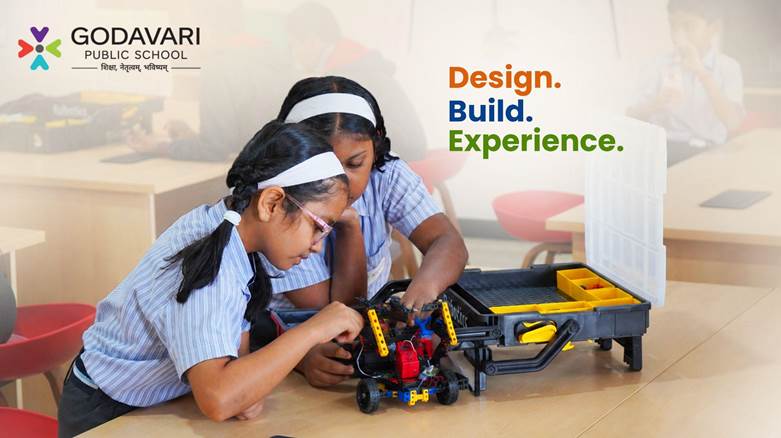
Robotics Lab in Nashik. today’s rapidly evolving world, technology is transforming the way we learn, work, and solve problems. Introducing Robotics and STEM education in schools helps students move beyond theory and develop practical skills through creativity, experimentation, and innovation. At Godavari Public School, students experience this approach through Creya, an engaging learning platform that encourages them to design, build, test, and improve their ideas. This focus on hands-on learning has become an important part of the learning experience at a CBSE school in Nashik, helping students connect classroom concepts with real-world applications.
About Creya
Creya is an experiential learning platform that focuses on developing students’ skills in STEM, Robotics, Engineering, Coding, Design Thinking, and Innovation. Its learning approach encourages children to become creators rather than just users of technology.
Through hands-on activities and project-based learning, students are encouraged to identify real-world problems, develop possible solutions, build prototypes, test their designs, and learn from their experiences. This makes technology learning interactive, meaningful, and enjoyable.
Robotics Curriculum from Grade 1 to Grade 7
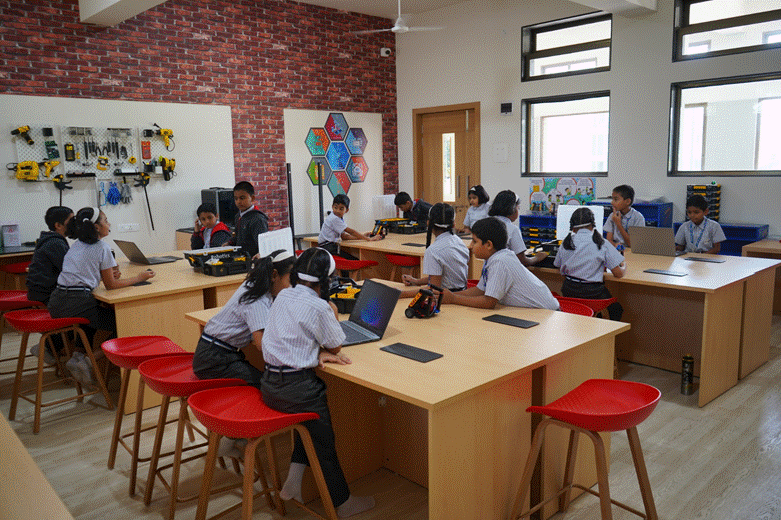
The robotics curriculum is thoughtfully designed for students from Grade 1 to Grade 7, with activities and projects becoming progressively more challenging as students advance through the grades. This progression allows students to develop their robotics and problem-solving skills step by step, while gaining practical experience through age-appropriate activities. Such learning opportunities add to the practical learning environment of a top CBSE school in Nashik.
In the primary grades, students learn the fundamentals of mechanisms, simple machines, logical thinking, coding, and basic robotics through fun, age-appropriate activities. They learn to understand how things work and gradually begin creating their own models.
As students move to higher grades, they explore more advanced concepts such as engineering design, programming, 3D designing, electronics, app development, and the Internet of Things (IoT).
This progressive curriculum allows students to build on their previous knowledge and develop confidence in solving increasingly complex problems.
Grade 1: Building with bricks
Grade 2-3: Working with Robbie, 3D-designing.
Grade 4-6: Motor control, TXT controller, 3D-designing, IOT
Grade 7: App development, IOT, Engineering design
Projects with Different Levels of Difficulty.
Robotics Lab in Nashik
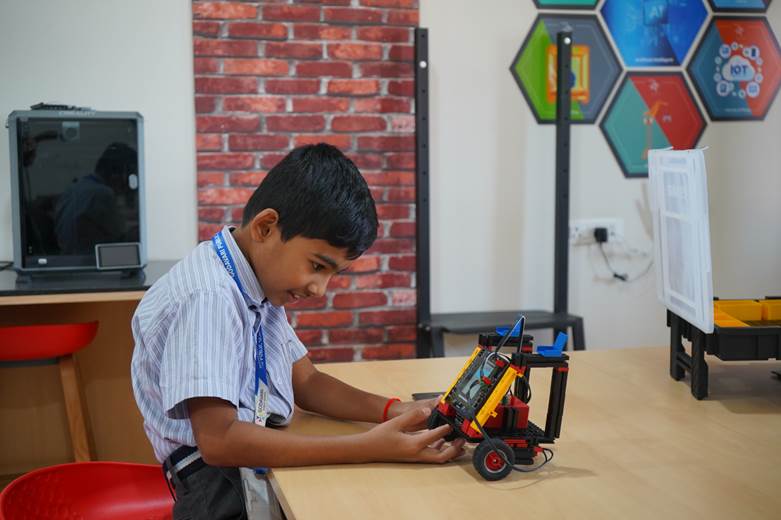
One of the most exciting aspects of the programme is the variety of hands-on projects. Projects are designed according to students’ age, ability, and learning level, making experiential learning a valuable feature for parents looking for the best CBSE School in Nashik that offers practical exposure.
Students begin with simple projects that help them understand basic concepts. Gradually, they move towards intermediate and advanced projects that require them to apply multiple concepts together.
Through these projects, students learn to:
- Think logically and creatively
- Identify and analyse problems
- Design and build prototypes
- Understand cause and effect
- Work collaboratively in teams
- Test and troubleshoot their designs
- Improve their projects based on observations
- Present and explain their ideas confidently
Every project becomes an opportunity for students to experiment, make mistakes, learn, and try again.
Final Thoughts
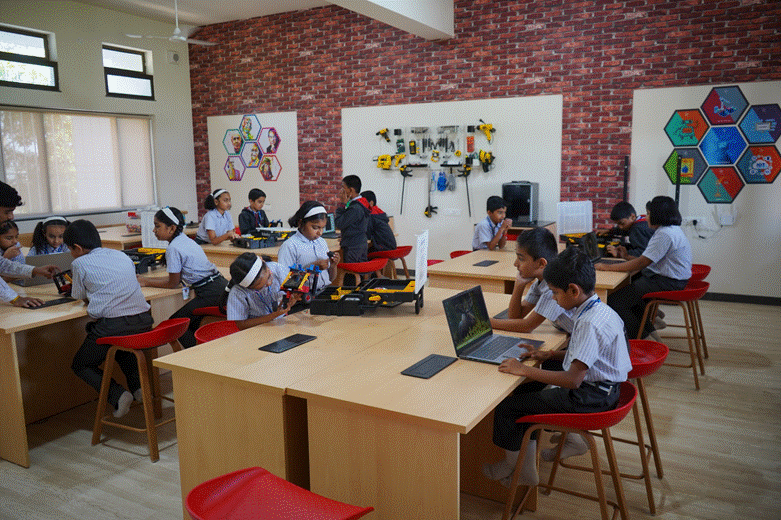
Robotics and STEM education make learning practical, creative, and engaging. Through Creya, students learn by designing, building, testing, and improving their ideas. At Godavari Public School, this hands-on approach helps students apply classroom knowledge to real projects.
From Grade 1 to Grade 7, students gradually develop skills in robotics, coding, problem-solving, teamwork, and innovation. They learn to experiment, overcome challenges, and become confident creators.
Frequently Asked Questions(FAQs)
1. What do students learn in a robotics lab?
Students learn coding, problem-solving, teamwork, design, and basic robotics concepts through hands-on projects.
2. From which grade do students start learning Robotics at the school?
The Robotics curriculum covers Grades 1 to 7, with activities becoming more advanced at each level.
3. What is Creya and how does it support STEM learning?
Creya helps students learn STEM, Robotics, Coding, and Innovation through hands-on projects.
4. Can students combine creativity with robotics?
Yes, they can design, customise, paint, and creatively present their robotic models.
5. What skills do students develop through robotics projects?
Students can develop coding, creativity, logical thinking, teamwork, and decision-making skills.