
Table of Contents
Teacher Training in CBSE Schools: Why It Matters at Godavari Public School. In today’s dynamic academic environment, the strength of a school is not measured only by infrastructure or board affiliation, but by the quality of its educators. At Godavari Public School, teacher development is not treated as a routine requirement; it is strategically integrated into the school’s academic framework. The emphasis on teacher training CBSE standards ensures that classrooms remain progressive, student-centred and aligned with national educational reforms.
Education under CBSE is steadily shifting from rote memorisation to competency-based learning. This transformation demands educators who are adaptable, reflective and professionally updated. Without structured and sustained teacher training, even the most carefully designed curriculum cannot achieve its intended outcomes.
The Expanding Role of Teachers in a CBSE Ecosystem
The modern CBSE classroom expects teachers to function not merely as instructors, but as facilitators, mentors, evaluators and learning architects. This evolution makes continuous professional development for teachers essential.
At Godavari Public School, teacher training and CBSE initiatives are thoughtfully designed to help educators:
- Interpret competency-based curriculum effectively
- Use analytical and application-oriented teaching strategies
- Manage diverse classrooms with inclusivity and confidence
- Integrate digital tools in a purposeful manner
Such continuous professional development for teachers ensures that training is not episodic but embedded within daily academic practice. Teachers are encouraged to refine their pedagogy, revisit assessment strategies and actively engage in reflective learning.
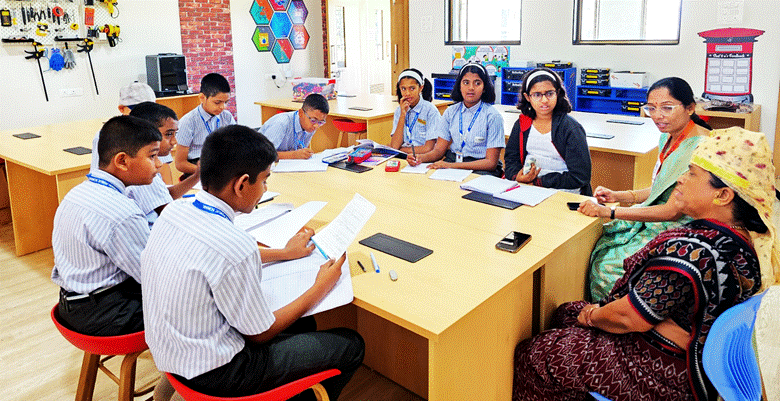
From Traditional Teaching to Modern Teaching Methods
The transition from lecture-driven instruction to interactive learning requires deliberate preparation. The implementation of modern teaching methods is central to teacher training in CBSE frameworks and at Godavari Public School, this transition is systematic and measurable.
Teachers are trained to confidently adopt:
- Experiential and project-based learning approaches
- Inquiry-driven discussions and case-based analysis
- Skill-focused formative assessments
- Technology-enabled classroom engagement
These modern teaching methods help students connect theory with real-world application. Instead of passive note-taking, students engage in collaborative problem-solving, concept mapping and experiential understanding. This shift, when executed by well-trained educators, strengthens retention and deepens conceptual clarity.
Understanding the Importance of Teacher Training in CBSE Schools
Teacher training CBSE programs at the school also emphasise structured lesson planning aligned with learning outcomes. Educators learn to design assessments that evaluate understanding rather than memorisation. This alignment between curriculum objectives and classroom delivery is a direct outcome of continuous professional development for teachers.
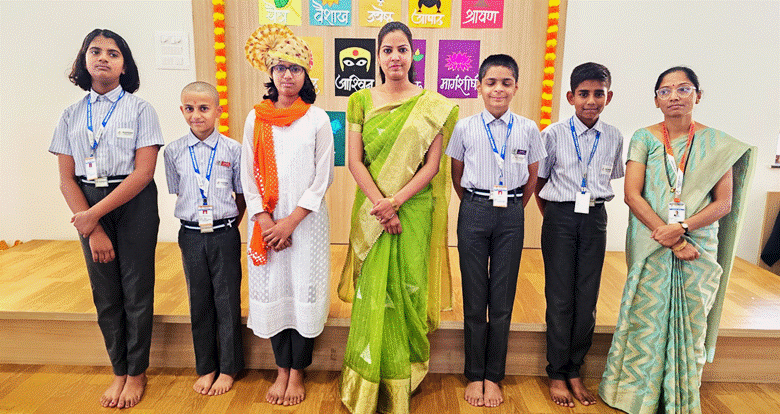
Direct Impact on Student Performance and Confidence
The influence of effective teacher training in CBSE programs is visible in student behaviour and academic performance. When teachers are professionally prepared, classrooms become psychologically safe spaces for curiosity and discussion.
Through continuous professional development for teachers, educators at Godavari Public School are equipped to:
- Identify individual learning gaps early
- Offer differentiated instruction
- Provide constructive feedback
- Prepare students for competency-based assessments
Students respond positively to such environments. They ask more questions, participate actively and approach examinations with greater confidence. Modern teaching methods further reduce academic stress by focusing on understanding rather than last-minute preparation.
Importantly, teacher training CBSE initiatives also prepare educators for evolving assessment formats, including case-study questions and skill-based evaluation patterns. This proactive preparation directly benefits students by ensuring familiarity and conceptual readiness.
Building a Sustainable Culture of Academic Excellence
Perhaps the most valuable outcome of sustained teacher training is the development of a learning culture among educators themselves. Continuous professional development for teachers at Godavari Public School fosters collaboration, innovation and accountability.
Rather than viewing training as an external obligation, teachers approach it as an opportunity for professional growth. Peer observations, collaborative planning and structured workshops create a feedback-driven environment. This culture naturally reflects in classrooms, where students observe learning as an ongoing and rewarding process.
By integrating teacher training CBSE standards with modern teaching methods, the school ensures that education remains relevant, adaptive and future-focused.
A Thoughtful Perspective
Investing in teacher training is ultimately an investment in student futures. Schools that prioritise continuous professional development for teachers create stronger academic foundations, more confident learners and more resilient outcomes.
At Godavari Public School, teacher training CBSE practices are not limited to compliance; they are integral to the institution’s identity. Through sustained professional development and consistent implementation of modern teaching methods, the school ensures that every classroom experience is meaningful, structured and forward-looking.
Because when teachers evolve, education transforms and when education transforms, possibilities expand.
Frequently Asked Questions (FAQs)
1. Why is teacher training in CBSE programs important?
Teacher training CBSE programs ensure that educators stay aligned with competency-based curriculum requirements and evolving assessment patterns.
2. What is continuous professional development for teachers?
Continuous professional development for teachers refers to ongoing learning, skill enhancement and reflective practices that help teachers remain effective throughout their careers.
3. How do modern teaching methods improve learning outcomes?
Modern teaching methods promote application-based understanding, critical thinking and student engagement, leading to stronger academic performance.
4. Does teacher training directly impact CBSE exam results?
Yes. Well-trained teachers design lessons and assessments aligned with CBSE expectations, improving conceptual clarity and exam preparedness.
5. How does Godavari Public School implement teacher training?
The school integrates structured workshops, peer collaboration, assessment alignment training and technology-based pedagogy into its teacher training CBSE framework.